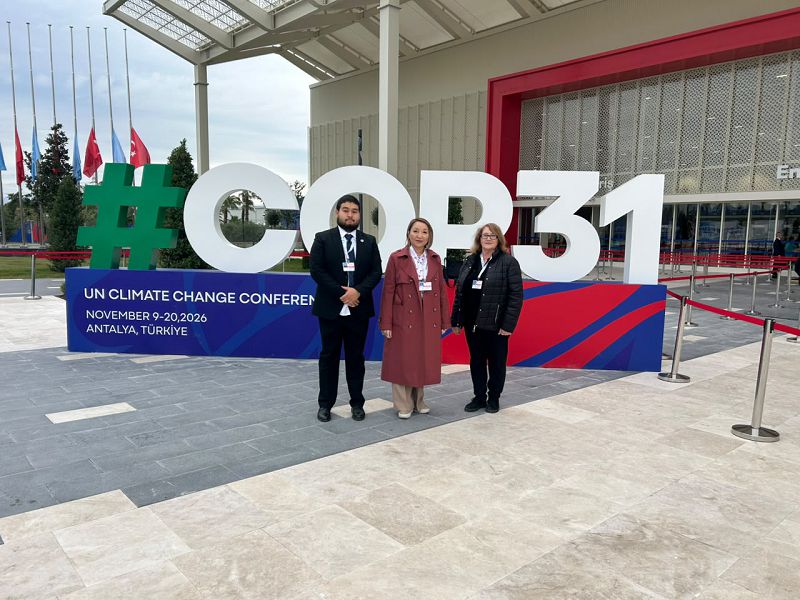
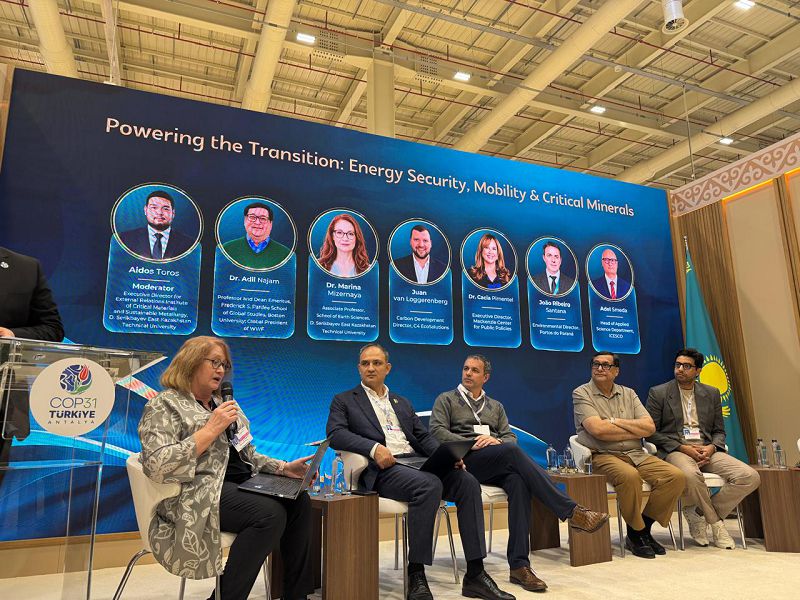
D. Serikbayev East Kazakhstan Technical University (EKTU) co-organized an international session as part of the 31st Conference of the Parties to the United Nations Framework Convention on Climate Change (COP31), taking place in Antalya.
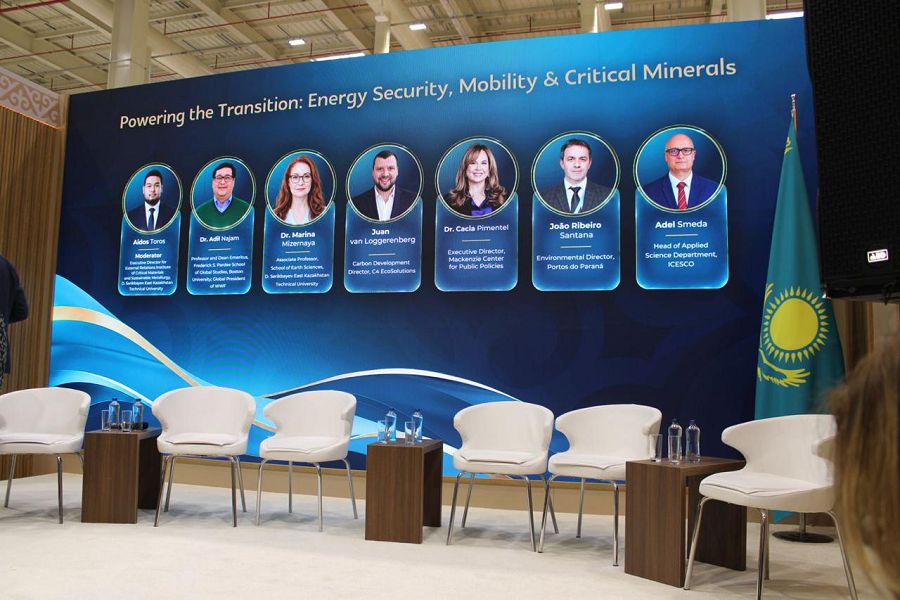
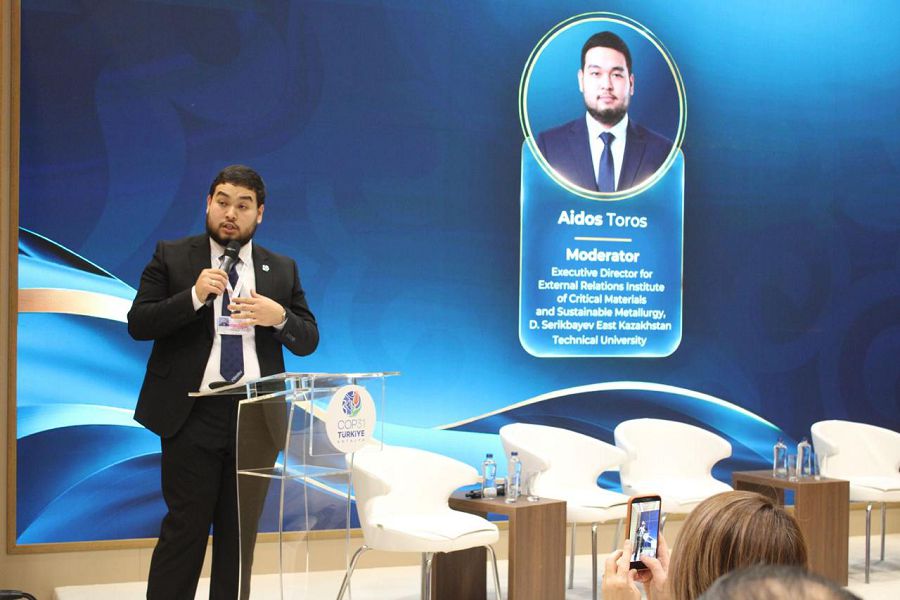
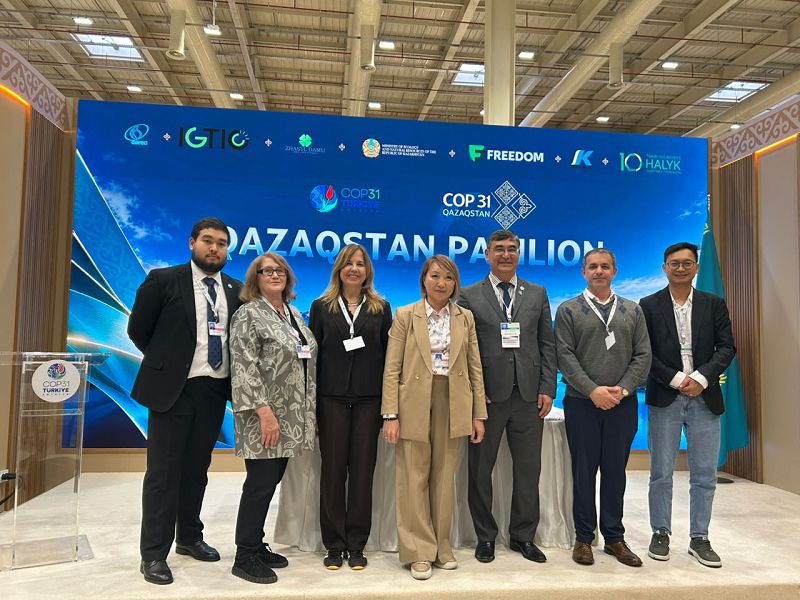
The session, titled “Powering the Transition: Energy Security, Mobility & Critical Minerals,” was held on 10 November 2026 at the National Pavilion of the Republic of Kazakhstan. It was jointly organized by EKTU, the Islamic World Educational, Scientific and Cultural Organization (ICESCO), and RTCC.
The session brought together representatives of international organizations, universities, and research centers from the United States, Morocco, and other countries. Among the participants were K. Yergaliyev, Head of ICESCO’s Science and Environment Sector, and M. Oshurbayev, Vice Minister of Ecology and Natural Resources of the Republic of Kazakhstan.
The experts discussed energy security, sustainable mobility, environmentally responsible mining, and the advanced processing of critical and rare earth metals.
EKTU contributed directly to the development of the session’s substantive agenda. The University presented Kazakhstan’s research and processing capabilities in the field of critical mineral resources, the results of its work under the TiBeRIUM project funded by the Horizon Europe programme, and its experience of cooperation with international academic and industrial partners.
Particular attention was given to the development of environmentally efficient technologies for processing titanium and beryllium, as well as to the establishment of sustainable supply chains for critical raw materials. Alongside EKTU, the TiBeRIUM project involves industrial partners from Kazakhstan, including the Ulba Metallurgical Plant and Tenir Group.
The issues discussed at COP31 are of strategic importance to East Kazakhstan. The region is home to major mining and metallurgical enterprises and has a well-established research and industrial base for studying and processing titanium, beryllium, and rare earth metals. The development of environmentally responsible technologies, the transfer of research results into industrial practice, and the training of highly qualified engineers are directly linked to the region’s future economic development.
International experts commended EKTU’s scientific, technological, and educational potential, as well as the University’s capacity to implement international research projects and train a new generation of engineers.
EKTU’s involvement in organizing an event of this scale at COP31 strengthens the University’s position within the international research community. It also creates new opportunities to expand academic and industrial partnerships, introduce advanced technologies at enterprises in East Kazakhstan, and implement joint international projects.