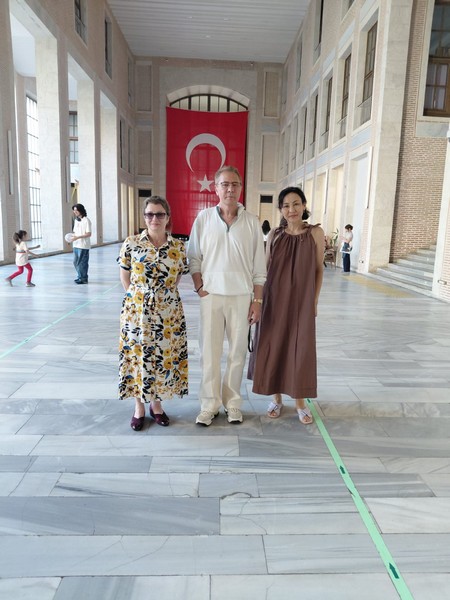
In accordance with the Calendar Plan of the grant-funded research project No. 184-595-25 AP26198919 “The Kazakhstani Family in the System of Social Relations: Potential and Problems of Interinstitutional Interaction in the Context of Modernization”, financed by the Science Committee of the Ministry of Science and Higher Education of the Republic of Kazakhstan (Contract No. 400/25-27 GF dated October 6, 2025), a research visit of the project team to Istanbul University was carried out.
One of the key objectives of the visit was the collection of materials for a theoretical and methodological analysis of advanced international experience, familiarization with contemporary scientific approaches to the study of multicultural communities characterized by diverse value systems and the capacity to achieve civic solidarity, as well as professional development in social research and the expansion of academic networks.
A significant part of the work was conducted at the Farabi Eurasian Research and Application Center (Farabi Avrasya Araştırma ve Uygulama Merkezi).
During the visit, expert meetings were held with representatives of the Center. The Center conducts research on political, economic, social, and cultural processes in the countries of the Eurasian region, including the Balkans, the Caucasus, Central Asia, and the Middle East. It implements joint projects with national and international institutions and organizations and maintains an extensive network of academic cooperation.
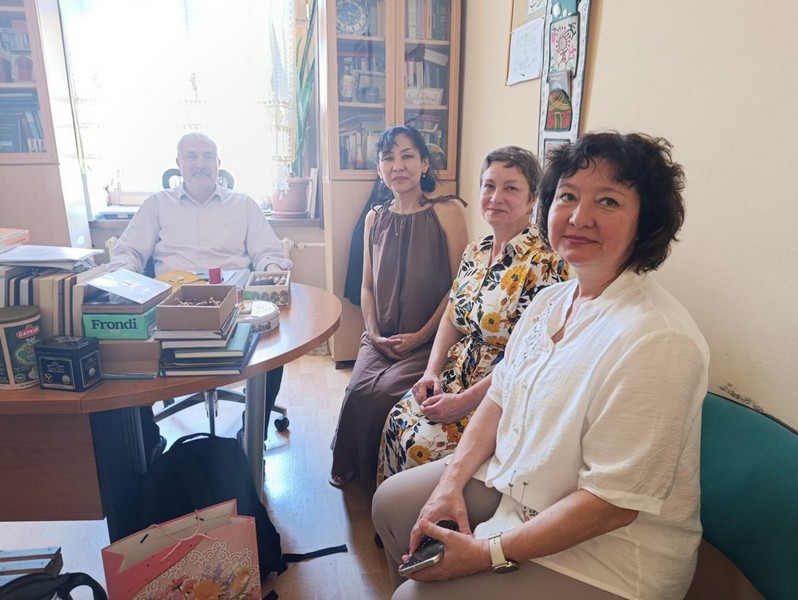
During discussions with the Director of the Center, Professor Abdullah Kızılcık, Doctor of Historical Sciences, and Professor Oraz Sapashev, a researcher at the Center, the parties confirmed their intentions for further scientific cooperation. The researchers also met with other scholars and doctoral students of Istanbul University.
At these meetings, the research group presented the results achieved within the framework of the ongoing project. Methodological approaches to studying the processes of social transformation were discussed, including changes in family structures, the evolution of family functions, interactions between families and other socialization institutions, and the impact of internal and external migration on the status of women in contemporary urban families.
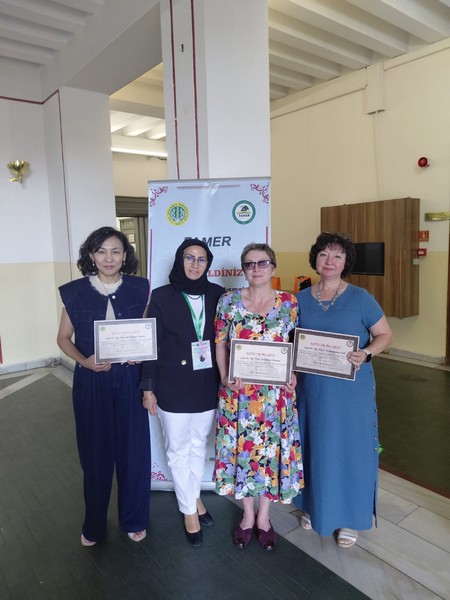
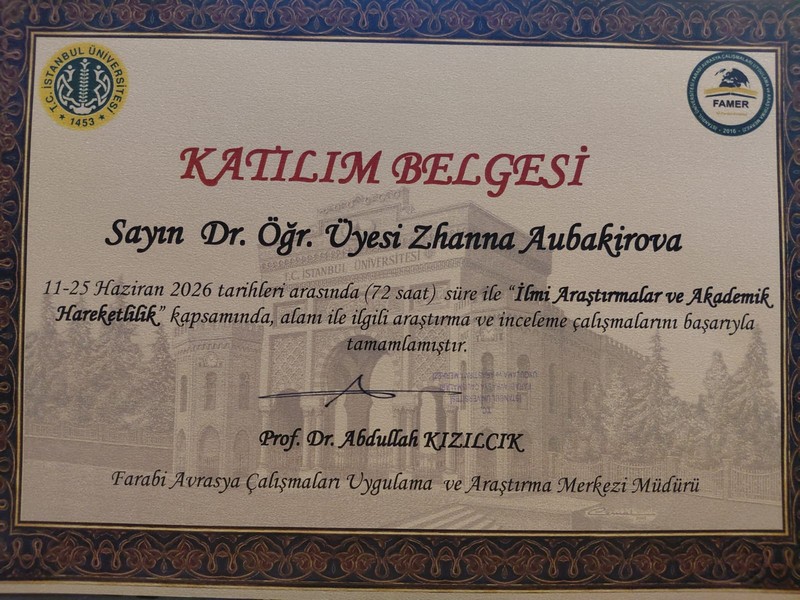
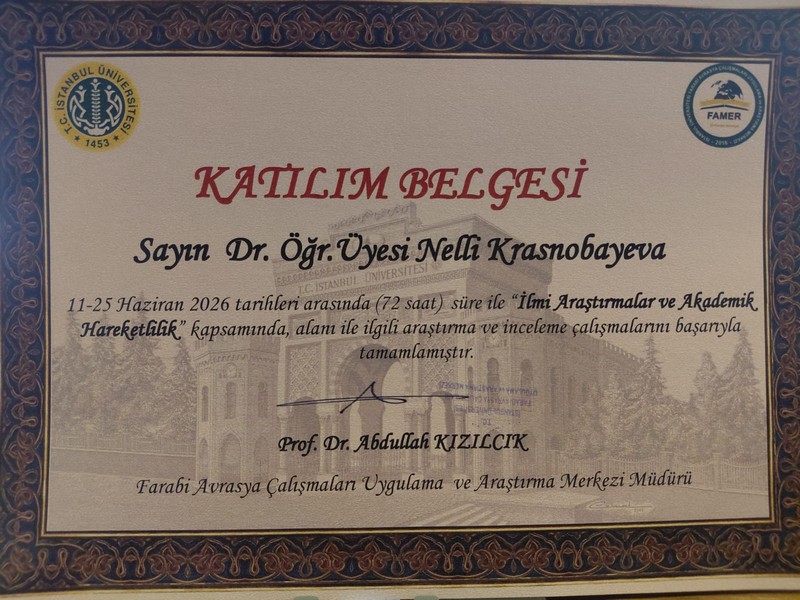
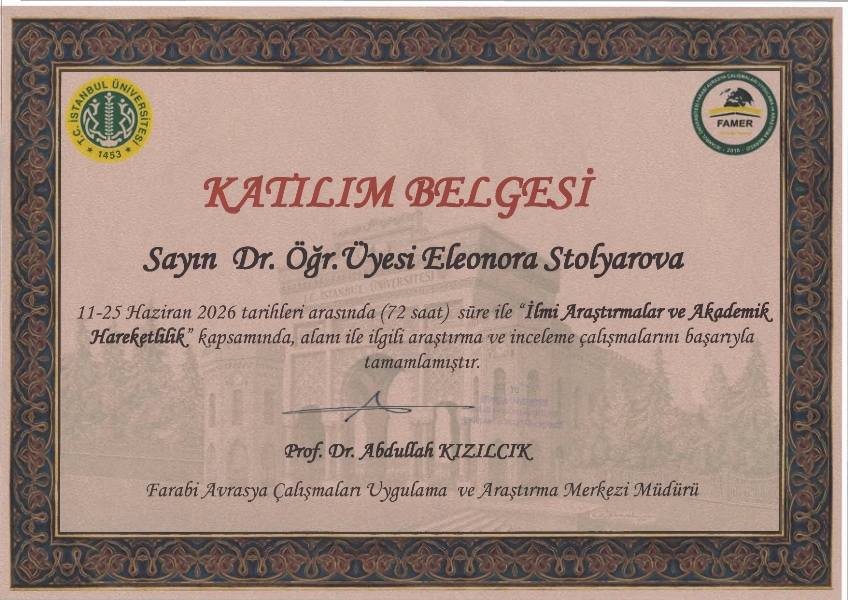
From June 10 to June 22, 2026, the project leader E.O. Stolyarova, leading researcher Zh.S. Aubakirova, and chief researcher N.L. Krasnobaeva completed a 72-hour professional development program and received corresponding certificates. During the internship, expert consultations and discussions were conducted on family policy, family values, and the transformation of the family institution in contemporary Turkish society.
International Research Center “Digital Social Research”