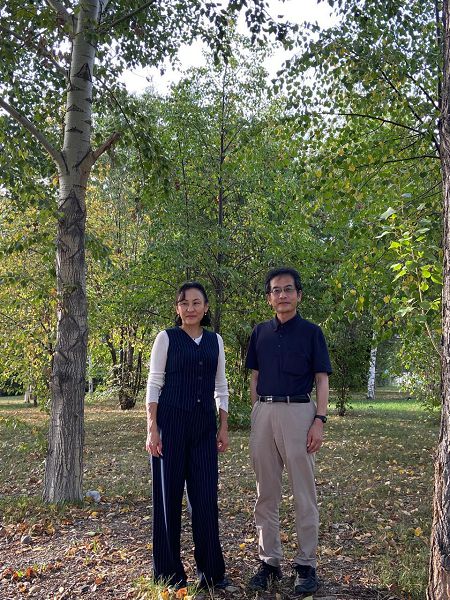
Tomohiko Uyama, an international expert at the DSR International Research Centre and Professor at the Slavic-Eurasian Research Centre of Hokkaido University in Sapporo, Japan, visited Ust-Kamenogorsk as part of the Kazakhstan–Japan research project Smart Mining Plus: Smart Mining for Next-Generation Sustainable Resource Development.
The project explores how intelligent technologies and environmentally responsible mining practices can be integrated to address challenges associated with air and water pollution in industrial regions.
Professor Uyama’s contribution focuses on the historical and social dimensions of the study. His work includes collecting local history materials on settlements in East Kazakhstan Region, interviewing residents and holding expert meetings with Kazakhstani researchers. This approach makes it possible to assess resource development not only from technological and environmental perspectives but also in relation to the history, demographics and everyday life of local communities.
During his fieldwork, Professor Uyama visited Ust-Kamenogorsk and the villages of Sekisovka and Bystrukha in Glubokoye District. He met history teachers, the administration of the local school in Bystrukha and community representatives. The information collected will contribute to a broader analysis of the historical and socio-demographic development of the region’s settlements.
At meetings with researchers from the DSR International Research Centre, the participants discussed current demographic trends in Kazakhstan and Japan, exchanged research perspectives and identified priorities for further cooperation.
EKTU’s involvement in the project strengthens the University’s international research partnerships and supports interdisciplinary work across engineering, environmental studies, history and the social sciences. Cooperation with Hokkaido University creates new opportunities for academic exchange, joint research and the involvement of international experts in addressing issues relevant to East Kazakhstan.
The findings will contribute to a better understanding of how industrial development affects the environment and local communities, while supporting evidence-based approaches to the sustainable use of the region’s mineral resources.